
Labour-only construction contract Pakistan: is it worth it?

Two quotes for the same 5-marla grey structure in Lahore arrive on your phone. One says PKR 2,750 per square foot including material. The other says PKR 700 per square foot, labour only. Both contractors speak confidently, both say they have built forty houses, and the difference between them is not the price. It is who carries the risk when cement runs out, steel rates jump or a wall comes up out of line.
A labour-only construction contract in Pakistan, known as mazdoori or a "labour rate" deal, is common across Punjab and Khyber Pakhtunkhwa. They can save real money if you are willing to manage the site, and they can cost you more than a full-contract build if you are not. Here is how to decide, and how to write the deal down.
What each contract type really means
Labour-only (mazdoori). You buy the cement, steel, bricks or blocks, sand, crush and water. The contractor supplies masons, labourers, bar benders, carpenters for shuttering and the supervision of their work. You pay per square foot of covered area, or per item of work.
Material-inclusive (full contract / "with material"). The contractor buys and supplies everything for a quoted rate. The price is higher per square foot because it contains his purchasing margin, wastage allowance and the risk of price movement, unless the contract allows price adjustment.
Hybrid. You buy the high-value items such as steel and cement, and he supplies sand, crush, bricks and small items. This is common because steel and cement are easy to verify and also the items most often disputed.
Rates change by city and by month. I will not quote a figure as if it were fixed. Collect three or four current quotes in your own area, and use the construction cost calculator to see where the quotes fall against a sensible estimate.
When labour-only works
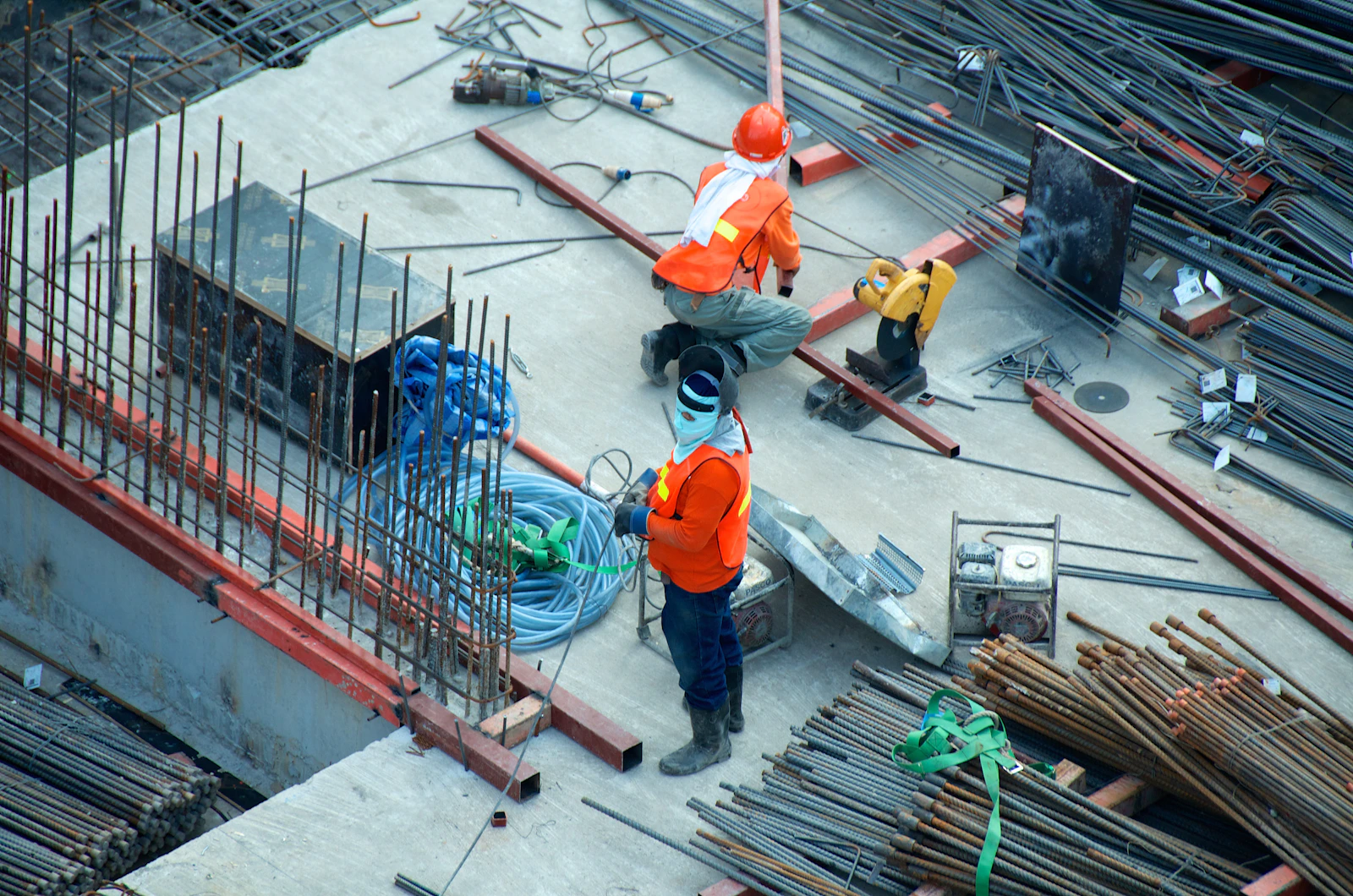
It works best when three things are true.
- You or a trusted relative can be on site daily, or at least every morning and evening. Material control is a daily job.
- You have time to buy. Prices differ between suppliers, and buying in lots, when you can, saves money. Spreading purchases across suppliers can also uncover better rates.
- The design is clear and drawings are approved. A labour contract on a half-decided plan becomes a stream of variations.
Overseas Pakistanis building from abroad should be wary. A labour-only job without a reliable local supervisor is where I have seen the worst losses, usually through material that disappears or is billed twice. A material-inclusive contract with stage payments is safer for you, even if it costs more per foot.
Where labour-only goes wrong
Wastage and theft. Steel off-cuts, bags of cement and bricks are the three things that leave a site quietly. Keep a store, with a lock, and a simple register of what comes in and what is issued. Check it weekly.
Quality shortcuts. Mixed concrete that is too lean, steel placed with insufficient cover, shuttering removed too early. A mason paid by area has every reason to go fast. Get a structural engineer to approve the drawings and visit at critical stages: before footing pour, before slab casting and before removing shuttering. A short visit costs far less than a repair.
Disputes over what is included. "Labour only" can exclude curing, scaffolding, tank excavation, boundary-wall plastering or even clearing the debris. If the contract does not name it, expect an argument.
Payment running ahead of work. Paying large advances in the first month leaves you without leverage in the third. Keep payments tied to completed stages.
Write the contract in plain language
You do not need a thick legal document. You need a few clear pages, signed by both parties with a witness, covering:
- Scope: what is built, floor by floor, with the approved drawings attached.
- Rate and measurement: how the area is measured, whether covered area includes porch, stairs and the boundary wall, and what rate applies to each.
- What the contractor supplies: tools, shuttering plates and props, scaffolding, water connections for site use, and curing labour.
- What you supply: named materials, with delivery timing.
- Stages and payments: for example, an initial advance, then payments after excavation and footings, after the plinth, after the ground-floor slab, and a retained amount released after a defect period.
- Timeline: expected duration and what happens if work stalls without reason.
- Rework: any item that fails the engineer's inspection is redone at the contractor's cost.
- Variations: changes must be agreed in writing with their rate before work starts.
- Safety and damage: who pays for damage to neighbours' walls or utilities caused by the work.
Retaining a modest part of the total until the structure has been through one rainy season is a sensible habit. Agree the share with the contractor at the start rather than raising it at the end.
Control the materials
Order in stages and write down quantities with the mason from the drawings. For concrete, prepare a plain list of what you are buying: cement bags per slab, steel by diameter and weight, crush and sand by trolley or cubic feet. Ask your engineer to check the sums.
Insist on delivery challans from suppliers and check them against the count and the bar bundle weights. For steel, ask for the grade and have the bars measured and weighed if you doubt them. For cement, store bags off the ground, on a platform covered with plastic, and use the oldest first.
Keep a tidy site notebook with dates, deliveries, labour attendance and payments. A notebook is boring until the week you need it.
Rough way to compare the two quotes
Take the full-contract quote and subtract the labour-only rate. The difference is the contractor's price for materials, purchasing and risk. Now estimate how much you could buy those materials for yourself, adding a realistic 5 to 10 percent for wastage and a small allowance for your own time and transport. If your own number is only a little lower than his, the saving may not justify the work and exposure. If it is clearly lower and you can manage the site, labour-only deserves a serious look.
Also remember that some of the saving comes from quality you control only if you are present. A reasonable full-contract builder with a good record and a stage-wise payment plan is worth the premium for someone who cannot attend.
Before you sign
Visit two of the contractor's recent sites, speak to the owners, and ask whether he completed on time and whether disputes arose. Check that the plot is approved for construction and your map is sanctioned by the relevant authority in your city. The Plot Finder and the unit converter help when you are matching plot size and covered area, and if you are still choosing a location, the area guides show typical prices in your target neighbourhood.
When the roof is poured and the weather turns cold, remember that concrete cures differently in winter, so ask your engineer about the schedule. A few extra days of patience will not harm a structure; a rushed stripping of shuttering might.
Build the paper first, then the walls. The cheapest rate in the bazaar is only cheap if the work inside it is clearly defined.
If you do go labour-only, schedule a fifteen-minute call with the contractor every Sunday evening to review the week: what was built, what materials remain, what arrives next and what you owe. A routine like this keeps both sides honest and makes small problems visible while they are still cheap to fix.
Frequently asked questions
What is a labour-only (mazdoori) contract in Pakistan?
The contractor supplies labour and supervision of the work, while you buy cement, steel, bricks, sand and crush. You pay a rate per square foot or per item of work. It can save money, but only if someone reliable controls materials on site every day.
Is labour-only construction a good idea for overseas Pakistanis?
Usually not, unless a trusted relative supervises daily. Without that, material theft and double billing are common problems. A full-material contract with stage-wise payments and engineer inspections is generally safer, even if the per-square-foot rate is higher.
How should I structure payments to a contractor?
Tie payments to completed stages such as excavation, footings, plinth and each slab, keep a modest retention until after a defect period, and put variations in writing with a rate before work starts. Avoid large advances in the first month.
Keep reading
Construction & RenovationUnderground water tank size Pakistan: a 10 marla plan
Count people, not marlas. A simple litres-per-day method, a worked 10 marla example, and the checks to demand before the slab is cast.
27 Oct 2026 6 min read
Construction & RenovationSoil test before building in Pakistan: what it costs and shows
Skip the soil report and a weak foundation can cost lakhs later. Here is what the test covers, what to ask for and how to use it.
15 Nov 2026 7 min read
Construction & RenovationHow to compare contractor quotes in Pakistan with a BOQ
Lump-sum quotes hide shortfalls. Learn which BOQ lines to compare, where contractors cut corners, and what to fix in the contract.
30 Oct 2026 6 min read