
Contractor payments in Pakistan: a 5 marla stage plan

Your contractor has quoted a lump sum for a 5 marla house in Lahore, Faisalabad or Rawalpindi, and now he wants 30 to 40 percent upfront "to book labour and material." That single sentence is where most disputes over contractor payments in Pakistan begin. Once the money is in his pocket, your leverage is gone, and the walls only go up as fast as his other sites allow.
The fix is not distrust. It is a payment schedule tied to work you can see and measure, written down before the first brick. Here is how to build one for a typical 5 marla (about 1,125 sq ft plot, usually a two-storey build of 2,000 to 2,300 sq ft covered area), and where owners most often get caught.
Why stage-wise beats "advance and pray"
A lump sum with a big advance moves all the risk to you. If the contractor runs out of cash, disappears to another site or hits a price spike in steel, the project stalls and you are negotiating from weakness.
A stage-wise schedule flips that. You pay for completed, checked work, and the contractor always has a reason to come back tomorrow: there is money waiting at the next milestone. Good contractors usually accept this, because it is how they pay their own mistris and suppliers anyway. The ones who refuse any milestone structure are telling you something.
One distinction first. If you have a labour-only contract (you buy material, he supplies labour), the schedule below applies to labour payments only, and your material spending runs separately. If it is a complete (with-material) contract, the schedule covers everything, and the quality of material becomes a bigger fight. If you are weighing those two models, our construction cost calculator gives a starting range for each before you collect quotes.
A sample schedule for a 5 marla grey structure
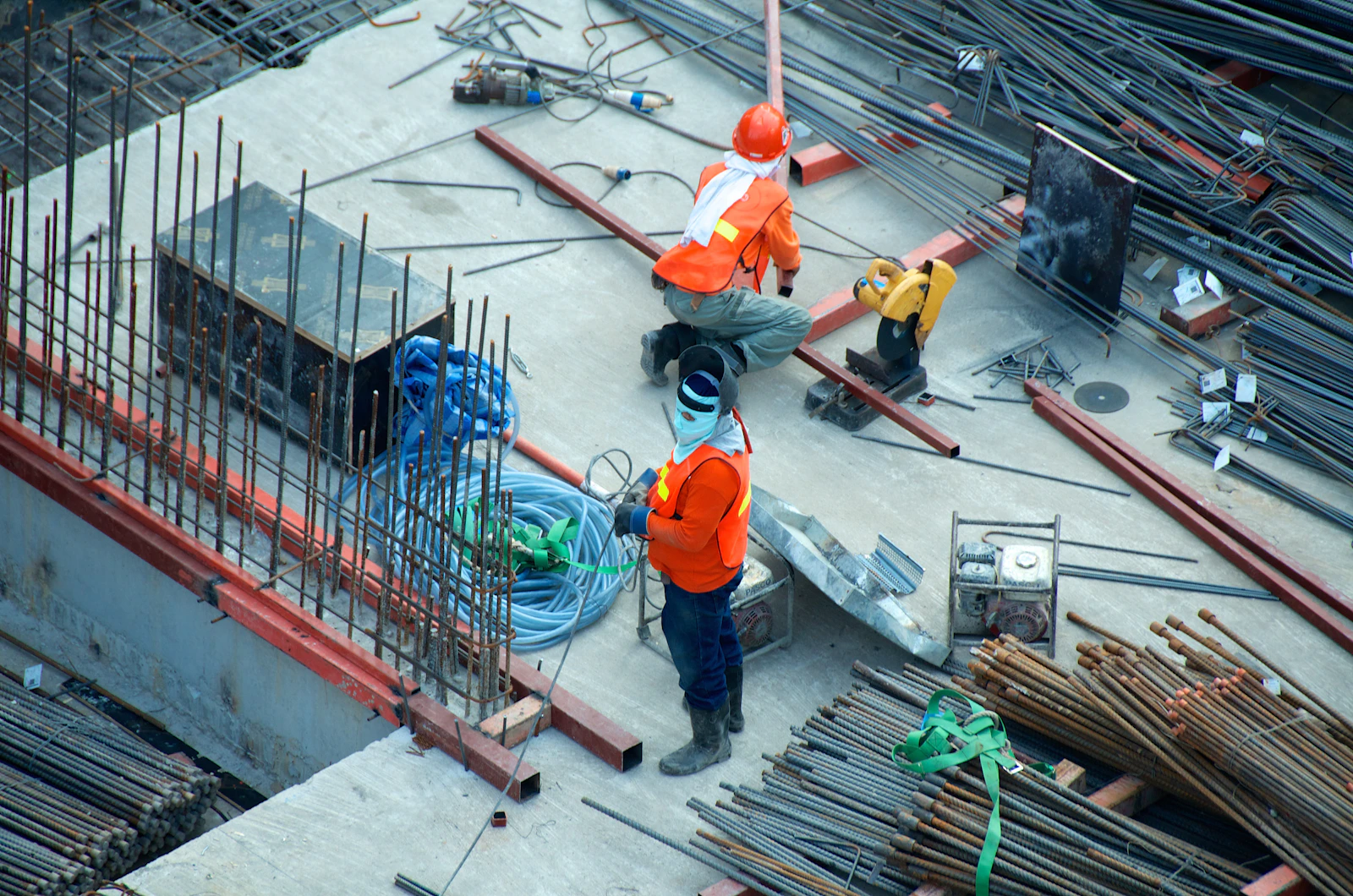
There is no official standard, and every contractor will counter with his own percentages. Treat the following as an opening position that you can adjust. The numbers are shares of the grey-structure contract value, not of your total budget including finishing.
- Mobilisation: 5 to 10 percent. Paid when the contractor starts on site with labour, after the layout is marked and approved by you (or your architect). Keep this small. It proves he is serious, nothing more.
- Excavation and foundations: 15 percent. Released after trenches reach the depth in the drawing, the PCC (plain cement concrete) is poured and cured, and the column starter bars are tied. Photograph it all. This part gets buried, so it is your only chance to check.
- Plinth beam and backfilling to plinth level: 10 to 15 percent. Released after the damp-proof course, the plinth beam and proper compaction of the fill in layers.
- Ground floor walls and columns: 15 percent. After brickwork or block work is up to lintel level with openings where the drawing puts them.
- Ground floor roof slab: 15 to 20 percent. After the slab is cast, and only after its curing period has run, not the day the concrete is poured.
- First floor walls and roof: 20 percent. Same logic, floor by floor.
- Retention: 5 to 10 percent held back. Paid 30 to 60 days after the grey structure is complete, once any cracks, seepage or leveling problems have shown themselves.
That retention is the single most useful line in the contract. Seepage under a bathroom slab or a hairline crack at a lintel rarely shows up on day one. It shows up after the first heavy rain or the first hot spell, and a contractor with money still owed to him returns your call.
Make each milestone checkable, not a matter of opinion
"Ground floor walls complete" is vague. "All walls to lintel level, openings per drawing, mortar joints filled, verticality checked with a plumb line" is not. For each stage, write two or three things you will verify before paying.
For the foundation stage, check trench depth with a measuring tape against the drawing, and confirm the PCC thickness before the reinforcement goes in. For slabs, check that the shuttering props are in place and that the bar spacing and cover match the structural drawing before the concrete truck or mixer arrives. After you approve the steel, concrete goes in quickly and you cannot inspect it again. If you can, have an engineer or experienced supervisor visit at those two pour moments. A couple of paid visits cost a small fraction of a major repair.
When steel arrives on site under a complete contract, our guide to checking saria on delivery is worth reading before the first lorry. Weigh a sample, measure the bar diameter and reject what does not match the quote.
The clauses that protect a schedule
A payment table is only half the document. Add these in plain language and have both of you sign every page.
- Start and finish dates, with a daily or weekly deduction for unexplained delays that the contractor himself caused. Make the amount modest and fair, or he will not sign.
- Rate escalation rule. Steel and cement prices swing, and in a complete contract the contractor will blame them mid-build. Agree in advance whether prices are fixed, or whether a stated basket (for example, steel only) is adjusted against a published market rate on a named date. Either choice is fine. Leaving it unwritten is the mistake.
- Variation orders in writing. Any change, such as moving a wall, adding a room or switching a slab thickness, gets a one-line signed note with the cost before the work starts. Verbal "okay, do it" instructions are behind a large share of the arguments we hear about at final settlement.
- Who supplies what. List water, electricity during construction, scaffolding, shuttering and the toilets for workers. These small items are the ones that turn into extra bills.
- Defect period. State a period during which the contractor repairs defects at his own cost, such as a first monsoon after completion.
When a contractor pushes back
Some will say, "My labour is paid weekly, I cannot wait for stages." Fair. Add a small weekly advance for labour wages, deducted from the next milestone, but cap it. A neat compromise is one week's labour wages in advance, always settled at the next stage payment.
Some will say the stages are too small. In that case, combine two milestones into one, but never merge the foundation with anything else. And never accept a schedule where more than half the contract value is paid before the ground floor roof slab is cast. At that point the outer shell exists, and the contractor still has the whole upper structure to build, which is where you most need leverage.
If a contractor is unwilling to put any schedule in writing at all, walk away. A smaller, honest contractor is better than a famous one who cannot keep a promise. Compare at least three quotes using the same bill of quantities so that you are comparing like with like.
Keep your own records
Open a simple notebook or phone folder for the build. Record the date, the stage, the amount paid, the mode of payment (bank transfer is better than cash), who received it and a photo of the completed work. Ask for a signed receipt each time. If a disagreement ever reaches an arbitrator or a court, a dated trail is worth far more than your memory.
Pay by cheque or bank transfer to the contractor's own account, not to a third person, wherever possible. Cash payments with no paper leave you with a story but no proof.
Before you sign this week
Pick your contractor, then sit down with a one-page draft of the stages above and mark your own percentages. Ask the contractor to mark his. The gap between the two sheets shows exactly where he expects to be paid before the work is done, and that is the negotiation worth having. If you are still pricing the project, run the plot through the marla/kanal unit converter so your drawings, quotes and per-square-foot rates all use the same area, and keep our property tools hub bookmarked for budgeting. Rates and labour costs shift month to month, and nothing here replaces an engineer on your own site.
Frequently asked questions
How much advance should I pay a contractor in Pakistan?
Keep the advance small, roughly 5 to 10 percent of the grey-structure contract, paid once labour is on site and the layout is approved. Large upfront payments remove your leverage. Tie every later payment to a checked milestone such as foundation, plinth, slab, and hold back a retention until defects show up.
What is retention in a construction contract?
Retention is a share of the contract value, often 5 to 10 percent, that you hold back for 30 to 60 days after the work is finished. It covers cracks, seepage or leveling problems that appear later. A contractor still owed money has a real reason to return and fix defects.
Should payments be in cash or by bank transfer?
Use bank transfer or cheque to the contractor's own account wherever possible, and keep a signed receipt and a dated photo for each stage. Cash with no paper leaves you without proof if a dispute reaches an arbitrator or court. A dated trail is worth far more than memory.
Keep reading
Construction & RenovationHow to compare contractor quotes in Pakistan with a BOQ
Lump-sum quotes hide shortfalls. Learn which BOQ lines to compare, where contractors cut corners, and what to fix in the contract.
30 Oct 2026 6 min read
Construction & RenovationBuild a 5 marla house in phases: what to do first
Building a 5 marla house in stages saves cash only if you plan it. Know what must be done once and what can wait.
13 Nov 2026 6 min read
Construction & RenovationRentable portion in a 5 marla house: cost vs rent check
A self-contained upper floor can help pay for your home, but only if the drawing, services and numbers are right. Here is what to settle before construction starts.
9 Nov 2026 6 min read