
August cement decision: cement price lock Pakistan

Read July dispatch data before you lock anything
If you’re pouring in August, this week’s decision is simple: fix your cement rate or float it. Don’t guess. Read what July is telling you.
- Start with APCMA’s July dispatches. If July is up by more than 8–10% year‑on‑year and plants are reporting tight clinker inventories, odds of Aug–Sep price firming increase. In that environment, dealers stop discounting and contractors struggle to honor earlier soft quotes.
- If July is flat or negative and you’re hearing about high stock at plants (easy truck availability, dealers calling you instead of the other way around), prices typically soften or stay range‑bound for a few weeks.
- Fuel and FX decide the next leg. A USD 10–20/ton uptick in imported coal or petcoke or a weaker PKR usually shows up as Rs 25–60 per 50kg bag within 2–4 weeks. I’ve watched plants adjust ex‑factory faster when both fuel and PKR move in the same direction. If, by month‑end, coal is up and PKR is sliding, I favor a contractor price lock.
- North vs South matters. If North plants (Lahore/Islamabad/Faisalabad belt) are running higher kiln utilization and South shows weaker local dispatch but stronger exports, the regional spread widens. Freight and plant behavior will put Rs 40–80/bag difference between a Lahore and a Karachi retail. Lock regionally, not “Pakistan‑wide”.
Call two dealers (not one) in your city and ask for (a) retail “cash and carry,” (b) retail “delivered to site,” and (c) discount slabs at 500 and 1,000 bags. That five‑minute exercise saves arguments on site. If you need to sanity‑check your overall build budget before you commit, run your numbers through our Construction cost calculator.
Know your August–September retail bands and realistic lock levels
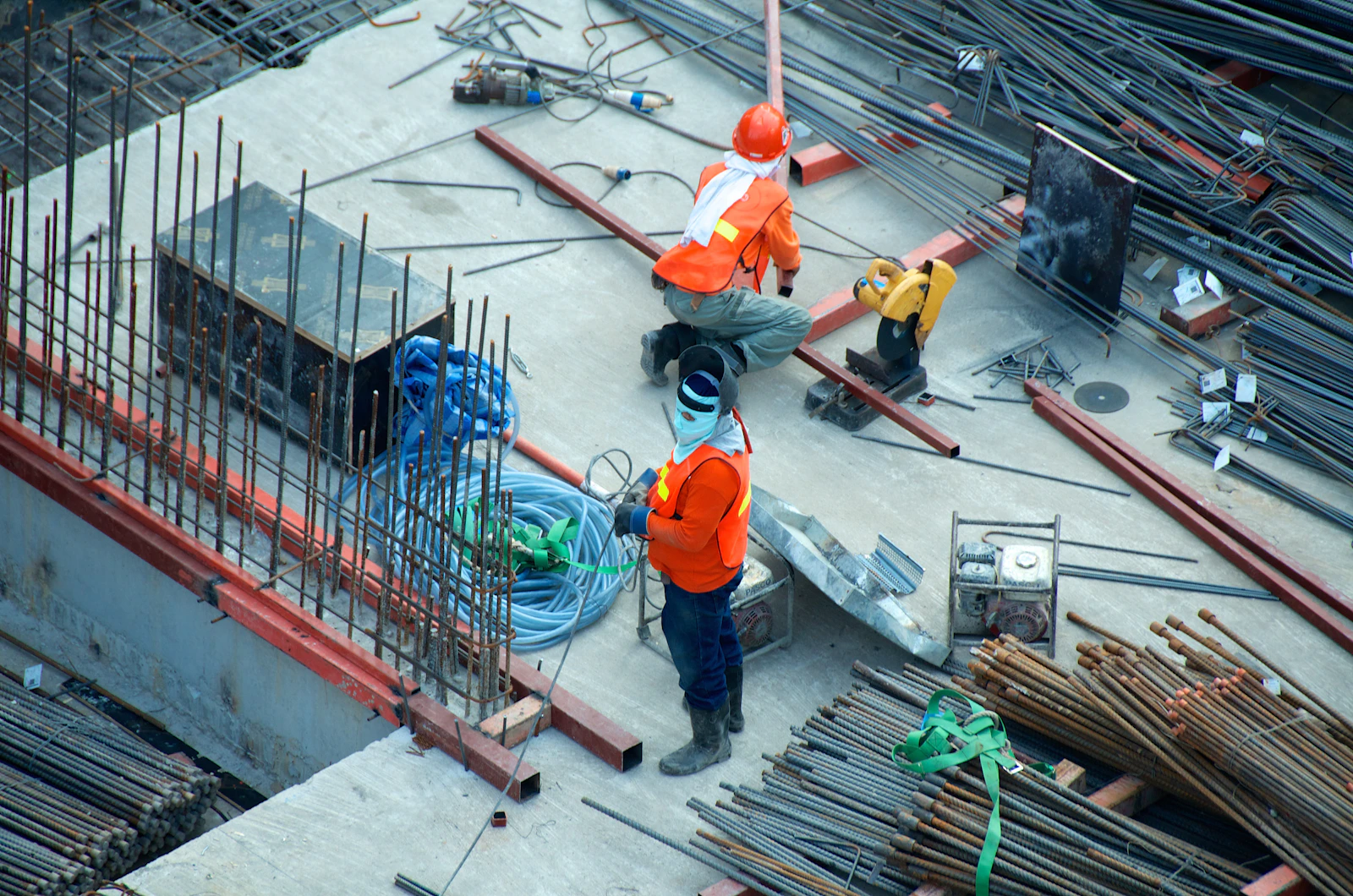
Plan your next 60–75 days with working bands. Verify in the week you sign.
- North (Lahore/Islamabad/Faisalabad): Rs 1,250–1,550 per 50kg bag retail
- South (Karachi/Hyderabad): Rs 1,200–1,500 per bag retail
City‑to‑city freight and dealer margin add Rs 30–70/bag. A small site in Gulberg won’t get the same rate as a 1,200‑bag site near Manga Mandi. Distance from plant and unloading access change real costs.
Contractor‑supplied grey usually “bakes in” a cement allowance:
- Soft markets: Rs 1,280–1,380/bag
- Tight markets: Rs 1,420–1,520/bag
A fair fixed lock for 60 days sits at retail minus Rs 30–60/bag, assuming steady off‑take (not stop‑start) and 500–1,000 bags over the period. If your contractor’s lock is worse than walk‑in retail, you’re subsidizing someone’s float.
Self‑procurement levers if you handle buying yourself:
- Dealer discounts typically begin at 300–500 bags (Rs 10–30/bag) and sharpen at 1,000+ bags (Rs 30–60/bag).
- Budget Rs 1,500–3,500 per 1,000 bags for unloading labour if the contractor pushes that back to you. That’s effectively Rs 1.5–3.5/bag; count it before you boast about your dealer discount.
If you’re toggling between build pace and cash flow, keep our Property tools hub handy for quick checks, particularly the Affordability calculator and Mortgage calculator if part of your grey is funded via a drawdown on Home financing.
Quantify cement need and timing: lock full, partial, or float?
Know your appetite before you order the biryani.
Rule‑of‑thumb cement consumption for a double‑storey RCC + brick house:
- 5 marla (~2,000–2,200 sft covered): 850–1,050 bags
- 10 marla (~3,500–3,800 sft): 1,500–1,900 bags
- 1 kanal (~6,000–6,500 sft): 2,600–3,300 bags
Design (basement, more columns), soil bearing capacity, mix designs, and slab thickness swing this ±10–15%. If you’re still converting architect drawings or combining portions, the Marla/kanal unit converter keeps everyone on the same page.
How demand lands across Aug–Sep:
- Foundations + plinth: 20–30%
- Columns + first slab: 25–30%
- Second slab: 20–25%
- Plaster/floor screeds: 15–20%
If monsoon is peaking in August and you plan to cast two slabs by late September, lock at least the first two phases (45–60%) for 60–75 days. That shields your structural pours—where quality risk is highest—from price and supply hiccups.
Sensitivity check I always run with owners:
- Every Rs 50/bag move changes a 1,000‑bag site by Rs 50,000.
- If your cash flow can’t absorb a Rs 150/bag spike (Rs 150,000 per 1,000 bags), prioritize a contractor lock or pre‑buy a tranche with a dealer.
Partial locks are underrated. Lock 50–70% keyed to your slab dates, float the rest. That way, if prices soften in September, you still benefit; if they jump, your core is protected.
Monsoon storage and wastage: what poor handling really costs
Wet season punishes sloppy sites. I’ve had to reject half a truck of clumped bags because someone thought one torn tarp was “enough.”
- Moisture risk cost: Practical wastage is 1–2% in dry months; it jumps to 4–8% in monsoon if stacks get damp. On 1,200 bags at Rs 1,400, a 5% loss is roughly Rs 84,000—and weaker concrete if clumps sneak in.
- Site storage spec that actually works:
- Keep bags on wooden pallets or 6" brick sleepers, minimum 6" off the floor.
- Stack max 10 bags high.
- Leave a 12" gap from walls for airflow.
- Use a double tarpaulin with a sloped top; weigh down edges so splashback doesn’t creep in.
- Operate FIFO (first‑in, first‑out) daily; date‑mark stacks with chalk.
- Reject any bag with hard lumps >10% by volume—don’t let it reach the mixer.
- Split deliveries: In heavy rain, schedule 200–300 bag drops tied to pour dates instead of one big lot. Add a covered bay (~10x12 ft) using a mild‑steel frame plus tarps; expect Rs 35,000–55,000. It pays for itself with one avoided wastage event and calmer pours.
Where contractors cut corners: - Leaving stacks directly on PCC floors “for a day,” which becomes a week. - Reusing thin, punctured tarps. - Breaking clumps by hammer and “adjusting slump” with extra water—your plaster will craze, and your concrete strength curve will suffer. Be the annoying client who checks.
Lock contractor supply or self‑procure? Use these scenarios
I’ve run both routes across Lahore, Bahria, and DHA jobs. The right answer changes with market pulse and your site discipline.
Choose a contractor lock if: - July dispatch is strong, coal and PKR are rising, and you’ll pour two slabs within 45–60 days. - You want your structural timeline ring‑fenced.
Insist on: - Fixed bag rate and 60–75 day validity. - Named acceptable brands (2–3 options; e.g., any top‑tier North brand, or for South, plant‑backed options). - Delivery schedule aligned to pour dates (e.g., 200 bags two days pre‑pour). - Wastage responsibility on the contractor (clearly state moisture damage and torn‑bag loss are on them). - A buffer quantity clause (e.g., up to +10% at same rate) so you’re not trapped if drawings shift steel or slab thickness.
Choose self‑procure if: - Dispatch softens or stays flat, and you see room for dealer discounts. - You have dry covered storage and someone responsible to manage FIFO. - Your consumption can hit 500–1,000+ bags to unlock slabs. - You want brand control for specific mixes (plaster vs RCC).
Put in the contract (labour‑only agreement): - Your right to source cement and timing. - Unloading responsibility spelled out (who pays, per‑truck rates, night deliveries). - Schedule protection: curing timelines unaffected by supply hiccups; contractor must plan pours around your confirmed delivery slots.
Clauses that save you real money: - Escalation trigger only beyond a threshold (e.g., change >Rs 80/bag vs base invoice date). - Proof via stamped dealer invoice or plant circular for any escalation notice. - Cap on total escalation (e.g., Rs 150/bag across the lock period). - Rejection rights for off‑brand or clumped bags—no back‑dated substitutions. - Never accept the vague line: “market rate at time of pour.”
Worked examples: what the decision changes on a 5 or 10 marla build
Let’s put hard numbers to the question.
5 marla, 950 bags over 60 days - Option A: Lock at Rs 1,380/bag = Rs 1,311,000. - If market rises to Rs 1,500, you save ~Rs 114,000. - If market falls to Rs 1,300, you overpay ~Rs 76,000. - Monsoon wastage: if contractor‑responsible, your risk is near zero; if self‑procure without tight storage, a 5% wastage at Rs 1,300–1,400 is ~Rs 62,000–66,500 burned. That swings the decision.
10 marla, 1,700 bags split 60/40 - Lock 60% (1,020 bags) at Rs 1,420 and float 680 bags. - If September dips Rs 70, blended effective is ~Rs 1,392/bag. - If September spikes Rs 100, blended is ~Rs 1,472/bag. - Partial lock smooths both outcomes while limiting overpay.
Storage math you can take to site - Spend Rs 45,000 on a covered bay and pallets. - If that reduces wastage from 5% to 2% on 1,700 bags at Rs 1,450, you save ~Rs 74,000. - Net gain ~Rs 29,000 plus better concrete quality and calmer pours. I’ve never regretted over‑investing in dry storage—only under‑investing.
If you’re mapping out the full grey‑to‑finish budget around these scenarios, our Construction cost calculator keeps cement, steel, and MEP allowances consistent with your covered area. Adjust area assumptions with the Marla/kanal unit converter so the math matches your drawings.
Practical buy tactics that beat “best rate bhai”
A few field habits move the needle more than haggling.
- Quote with timing. Ask dealers for a next‑7‑days delivered rate tied to specific drop dates and payment terms (e.g., 70% on GRN, 30% after pour). Vague “today’s rate” quotes evaporate.
- Brand flexibility, not roulette. Approve two or three acceptable brands up front. That gives room to shift within your quality bar without last‑minute surprises.
- Lock by phase, not by calendar. Tie your lock to milestones (plinth complete, first slab cast) with a quantity range per phase. Contractors work better toward pours than toward dates.
- Tally real landed cost. Add freight, unloading, site access delays (if the lane can’t take a 22‑wheeler), and after‑hours delivery premiums. The “cheapest bag” often becomes the most expensive truck on pour day.
- Payment discipline. Dealers sharpen pencils for accounts that pay as promised. If you stretch them on cash flow, they’ll stretch you on price. If you’re financing parts of the build, align disbursements via Home financing with your slab schedules to avoid last‑minute expensive buys.
Your August playbook: do this week
Make the decision fast and clean. Here’s how I’d run it on a live site in Lahore or Karachi.
1) Check the pulse - Pull APCMA’s July dispatches (YoY and MoM). - Note coal/petcoke and PKR direction this fortnight. - Call two local dealers for retail delivered and slab discounts at 500 and 1,000 bags.
2) Decide lock scope - If July strong and fuel/FX rising: lock 45–60% for 60–75 days (foundations to first or second slab). - If July soft and stable inputs: lock 30–40% for plinth + first pour; float the rest with split deliveries.
3) Write it down (no handshake myths) - Contractor lock: fixed bag rate, 60–75 days, 2–3 named brands, delivery calendar, wastage on contractor, escalation only beyond Rs 80/bag, cap Rs 150/bag, proof required. - Self‑procure: labour‑only terms, your sourcing right, unloading spelled out, schedule protection for curing, rejection rights for clumped or off‑brand bags.
4) Prep storage now - Build a 10x12 ft covered bay, pallets or 6" sleepers, double tarps, FIFO chalking, stack 10 high max, 12" wall gap. - Plan 200–300 bag drops aligned to pour dates for the next four weeks.
5) Stress‑test cash flow - Run your grey‑phase spend using the Construction cost calculator. - Sense‑check monthly outlay with the Affordability calculator and Mortgage calculator if you’re using bank draws.
6) Keep a weekly trigger - If bags move ±Rs 50 and you still have 500+ bags to buy, re‑price. Top up the lock if the trend is up; let it float if inventories build and rain eases.
Make August boring. Boring means dry stacks, trucks that arrive a day before you need them, and a rate that doesn’t change mid‑pour. If your site team executes the storage spec and your contract carries the right clauses, cement becomes a solved problem—and you can focus on mixes, cover blocks, and curing, where strength is really won.
Frequently asked questions
Is cement cheaper in monsoon in Pakistan or does it usually rise?
Monsoon can go either way. If July APCMA dispatch is weak and plants hold high stock, prices soften or stay range-bound. If dispatch is strong and coal/PKR rise together, retail typically firms within 2–4 weeks. Always check local dealer quotes and input trends before locking.
How many cement bags should I plan for a 5 marla double-storey grey structure?
For a typical 5 marla (≈2,000–2,200 sft covered) double-storey RCC + brick house, plan 850–1,050 bags. Basement, heavier columns, soil capacity and mix designs can swing this by ±10–15%. Phase need roughly: 20–30% foundations, 25–30% first slab, 20–25% second slab, 15–20% plaster/screeds.
What exact clause should I add to lock cement price with my contractor?
State a fixed bag rate, 60–75 day validity, 2–3 acceptable brands, delivery schedule by pour, wastage on contractor, and escalation only beyond Rs 80/bag with stamped dealer/plant proof, capped at Rs 150/bag total. Add a +10% buffer quantity at the same rate and rejection rights for clumped or off-brand bags.
Keep reading
Construction & RenovationShould you bulk‑buy cement and steel in Oct 2026?
Oct 2026 guide: real PKR rates, phase-wise quantities, storage that works, and when supplier rate-locks make bulk buying cement and steel worth it in Pakistan.
10 Oct 2026 11 min read
Construction & RenovationShould you build during monsoon in Pakistan (2026)?
Monsoon build in Pakistan, 2026: real delays, cost cushions, safe RCC pours, curing days, and smart steel/cement buying—Lahore, Islamabad, Karachi specifics.
30 Jul 2026 9 min read
Construction & RenovationSmart escalation clauses to cap cement/rebar shocks
Practical escalation clause for Pakistan: SPI-linked baseline, clean formula, caps/bands, and monsoon storage tips to tame cement/rebar shocks.
31 Jul 2026 9 min read